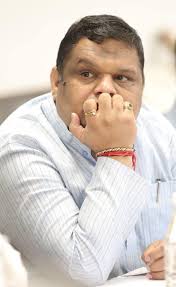
Manish Jain

A reporter associated with NCIB News, focusing on local and regional developments. Coverage includes administrative activities, community issues, and matters of public interest. The work aims to present clear, factual, and grounded information in alignment with the channel’s tagline, “From News to Reality.” Stories often highlight local concerns, government responses, civic challenges, and events that directly affect people in the region. Regular contributions are made to NCIB News through consistent reporting and updates.

NHRC Seeks Report in Suspicious Death of NEET Aspirant in Patna

New Delhi 27 Jan 2026

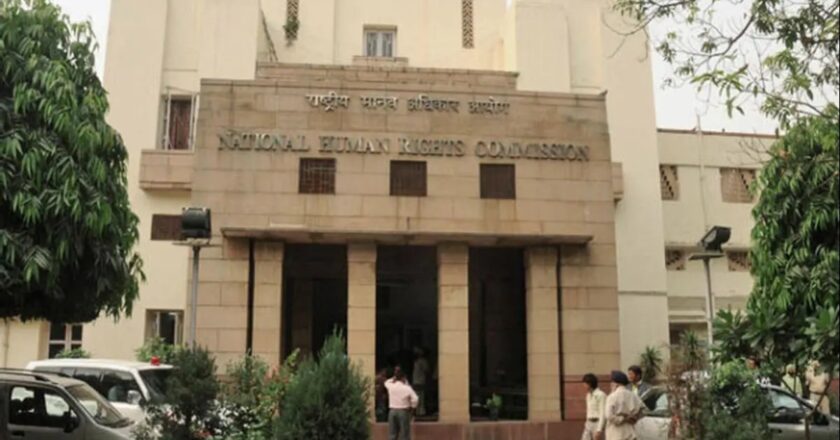
The National Human Rights Commission (NHRC) has taken cognizance of a complaint alleging serious human rights violations in the suspicious death of a young girl student preparing for the National Eligibility cum Entrance Test (NEET) in Patna, Bihar. The Commission has directed the Commissioner of Police, Patna, to submit an Action Taken Report (ATR) within two weeks.
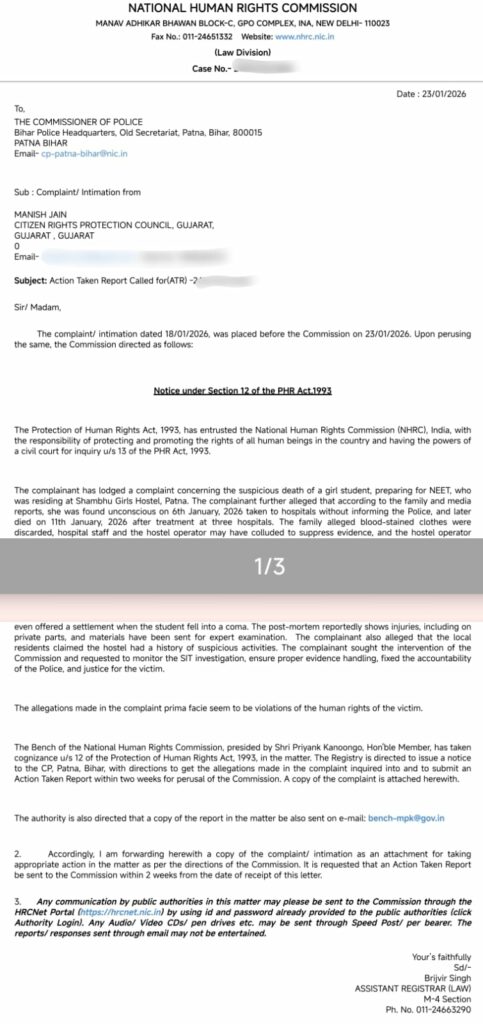
The issue was submitted by Citizen Rights Protection Council (CRPC), raising concerns over the circumstances surrounding the student’s death and the manner in which the case was initially handled by local authorities. After examining the material on record, the NHRC observed that the allegations prima facie disclose violation of human rights and issued notice under Section 12 of the Protection of Human Rights Act, 1993.

Allegations and Investigation Concerns

According to the complaint, the student was residing in a private girls’ hostel in Patna and was found unconscious on January 6, 2026. She was reportedly taken to multiple hospitals without immediate intimation to the local police, a lapse that has raised serious questions regarding adherence to medico-legal protocols. The student later died on January 11, 2026, after being treated at three different hospitals.

The family of the deceased has alleged that blood-stained clothes were discarded, pointing to possible destruction of evidence. It has also been alleged that hostel management and hospital staff may have acted in collusion, and that an attempt was made to settle the matter when the student slipped into a coma.

The post-mortem report reportedly indicates multiple injuries, including injuries on private parts, with samples sent for forensic examination. The family has further alleged that despite the gravity of the case, there were serious lapses by the investigation team, including delay in securing evidence and lack of transparency, prompting the need for intervention by independent institutions.

NHRC Directions
Taking note of the seriousness of the allegations, the NHRC Bench, presided over by Shri Priyank Kanoongo, has directed the Commissioner of Police, Patna, to conduct a thorough and impartial inquiry and submit a detailed report to the Commission through the HRCNet portal, in accordance with NHRC procedures.

Need for Oversight and Accountability

The case underscores the critical role of constitutional bodies like the NHRC and human rights organisations such as Citizen Rights Protection Council (CRPC) in ensuring accountability when families allege investigative failures, suppression of evidence, or institutional negligence. Such interventions are considered essential to safeguard human rights and ensure that investigations remain fair, transparent, and free from influence.

The incident has once again raised broader concerns regarding the safety of students in private hostels, handling of suspicious deaths, and the need for timely police action in medico-legal cases.

The circumstances surrounding the death of a young student reveal serious and disturbing lapses at multiple levels — from delayed police intimation to alleged mishandling of crucial evidence. When families raise credible concerns about the investigation itself, intervention by constitutional bodies like the NHRC and vigilant civil society organisations becomes not just necessary, but unavoidable. Justice cannot be compromised by negligence, influence, or silence. Accountability must be fixed, and the truth must come out, without fear or favour.”

— Manish Jain, Public Relationship Officer,

Citizen Rights Protection Council (CRPC)
NHRC Takes Cognizance of Unsafe Drinking Water Across States, Calls It Human Rights Violation

Updated : January 23, 2026

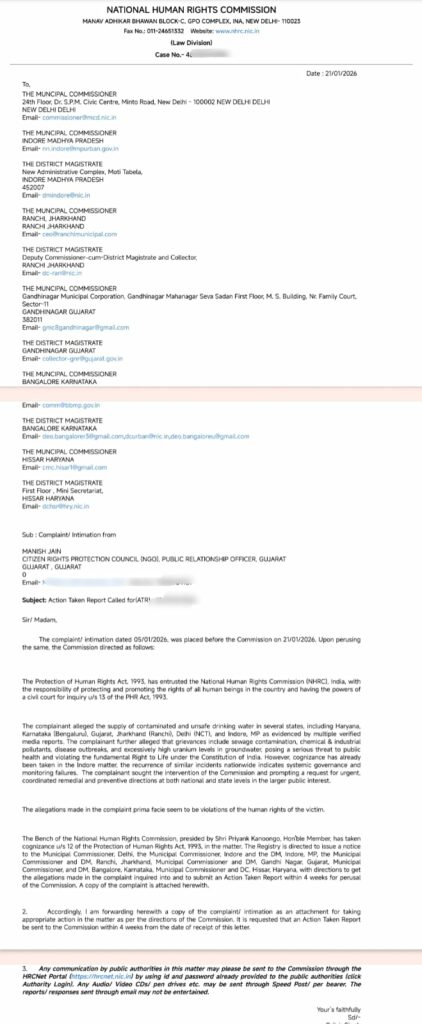
The National Human Rights Commission (NHRC) has taken cognizance of serious concern related to the supply of contaminated and unsafe drinking water in multiple Indian states, observing that the issue amounts to a prima facie violation of human rights and the constitutional Right to Life.

The Commission has issued notices to senior municipal and district authorities in Delhi (NCT), Indore (Madhya Pradesh), Ranchi (Jharkhand), Gandhinagar (Gujarat), Bengaluru (Karnataka), and Hisar (Haryana), directing them to conduct inquiries and submit Action Taken Reports (ATRs) within four weeks.


Clean Drinking Water Integral to Right to Life: NHRC

In its order dated 21 January 2026, the NHRC noted that access to safe and potable drinking water is inseparable from human dignity, public health, and survival.

The complaint placed before the Commission referred to multiple verified media reports highlighting:

  • Sewage contamination in drinking water supply
  • Chemical and industrial pollutants
  • Outbreaks of waterborne diseases
  • Excessively high uranium levels in groundwater

The Commission observed that such conditions pose a grave threat to public health, particularly affecting children, elderly persons, and economically vulnerable communities.


Pattern of Failures, Not Isolated Incidents

While acknowledging that cognizance had already been taken earlier in an Indore-related matter, the NHRC stated that the recurrence of similar incidents across different states indicates systemic governance and monitoring failures.

The Commission emphasized that repeated lapses by civic bodies and district administrations reflect deeper issues in regulation, infrastructure maintenance, and accountability mechanisms.


Cognizance Taken Under Protection of Human Rights Act

The matter was considered by the NHRC Bench presided over by Hon’ble Member Shri Priyank Kanoongo. The Commission took cognizance under Section 12 of the Protection of Human Rights Act, 1993, and reiterated that it has the powers of a civil court under Section 13 to inquire into such violations.

Notices have been issued to Municipal Commissioners and District Magistrates of all concerned regions, directing them to personally ensure inquiry, corrective steps, and preventive measures.


Citizen Rights Protection Council (NGO) Brings Issue to NHRC

The issue was raised by Manish, public relationship officer Gujarat, highlighting the nationwide scale of the drinking water crisis.

CRPC presented media reports suggesting that unsafe water supply is no longer an isolated civic failure but a widespread public health and human rights concern, requiring urgent intervention at both state and national levels.

The involvement of the Citizen Rights Protection Council underscores the role of civil society in flagging systemic issues and ensuring that citizens’ grievances reach constitutional oversight bodies.

“Recurring incidents of polluted water supply across multiple states point to institutional neglect, not isolated errors, and demand urgent corrective and preventive action.”

Manish Jain PRO State

Strict Reporting Mechanism Ordered

The NHRC has directed that:

  • All inquiries must be conducted promptly
  • Concrete remedial and preventive steps must be initiated
  • Action Taken Reports must be submitted only through the HRCNet Portal / Speed post.

A Strong Signal on Public Health Accountability

Human rights experts say the NHRC’s intervention reinforces the principle that failure to provide safe drinking water is not merely administrative negligence but a violation of human rights.

As authorities across multiple states prepare their responses, the case is being closely watched as a potential benchmark for treating environmental and public health failures through a human rights accountability framework.

Medical Associations Object to NEET-PG 2025 Cut-off Reduction Following NBEMS Notification

January 14, 2026

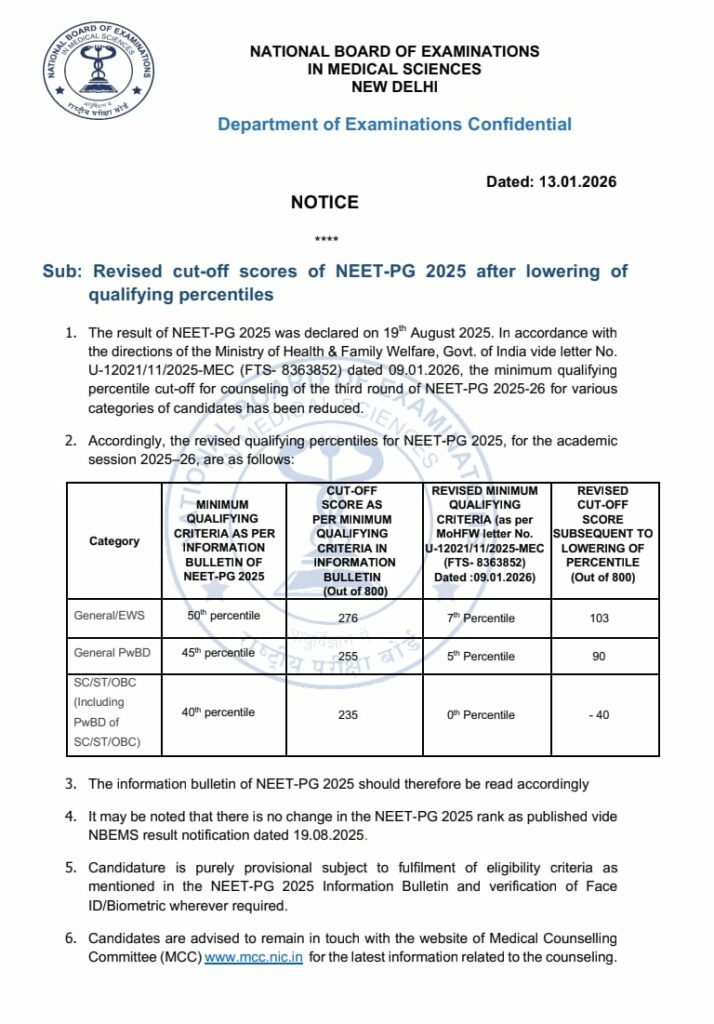
The decision to reduce the qualifying cut-off scores for NEET-PG 2025 has drawn strong objections from national medical associations, following a notification issued by the National Board of Examinations in Medical Sciences (NBEMS) on 13 January 2026.

NBEMS

According to the NBEMS notice, issued on the directions of the Ministry of Health & Family Welfare, the minimum qualifying percentiles for participation in the third round of NEET-PG 2025–26 counselling have been reduced across categories. The revised criteria allow eligibility at the 7th percentile for General/EWS candidates, 5th percentile for General PwBD, and 0th percentile for SC/ST/OBC candidates, with the corresponding cut-off score for the latter category being minus 40 marks out of 800.

NBEMS clarified that there is no change in NEET-PG 2025 ranks as declared on 19 August 2025 and that candidature remains subject to eligibility verification as per the NEET-PG Information Bulletin.

FORDA Raises Concerns on Merit and Training Standards

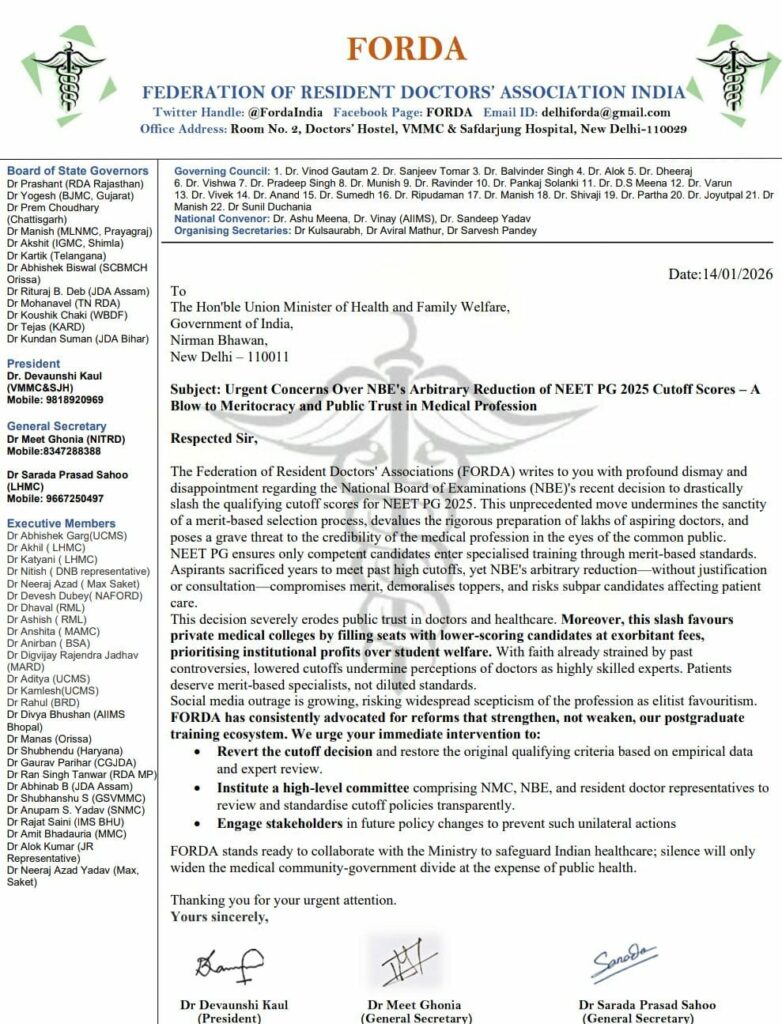
The Federation of Resident Doctors’ Associations (FORDA), in a letter addressed to the Union Minister of Health and Family Welfare dated 14 January 2026, expressed “profound dismay and disappointment” over the reduction of cut-off scores.

FORDA

FORDA stated that NEET-PG is intended to ensure merit-based entry into postgraduate medical education and that the sudden lowering of qualifying criteria, without stated academic justification or stakeholder consultation, undermines the credibility of the examination process. The association highlighted that aspirants prepare for years to meet qualifying standards and that such revisions adversely affect confidence in the system.

The letter further stated that diluted qualifying thresholds raise concerns regarding the quality of postgraduate medical training and may affect public trust in the medical profession.

FAIMA Demands Withdrawal of Notification

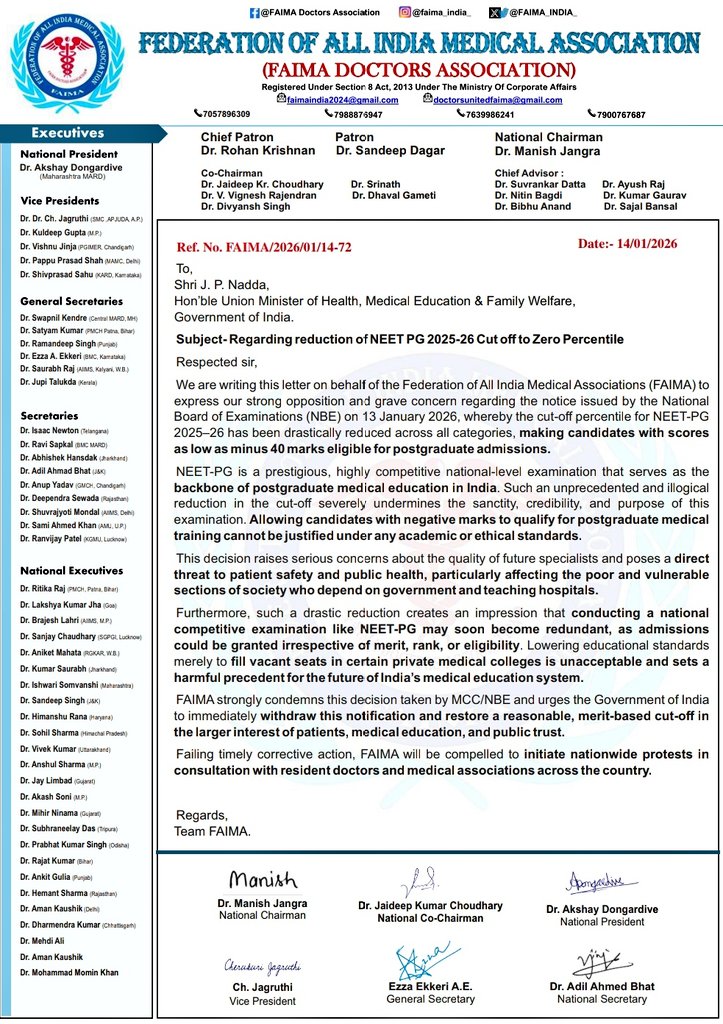
Separately, the Federation of All India Medical Associations (FAIMA) also objected to the NBEMS notification through a formal representation dated 14 January 2026.

FAIMA

FAIMA described the reduction of the cut-off to zero percentile as unprecedented and stated that permitting candidates with negative marks to qualify for postgraduate medical education cannot be justified on academic or ethical grounds. The association expressed concern regarding implications for patient safety and public health, particularly in teaching and government hospitals.

FAIMA urged the Government of India to withdraw the notification and restore a merit-based qualifying cut-off. The association also stated that it may initiate nationwide protests if corrective action is not taken.

Call for Review

Both FORDA and FAIMA have sought intervention from the Union Health Ministry and have requested a review of the revised cut-off decision in the interest of maintaining standards in postgraduate medical education.

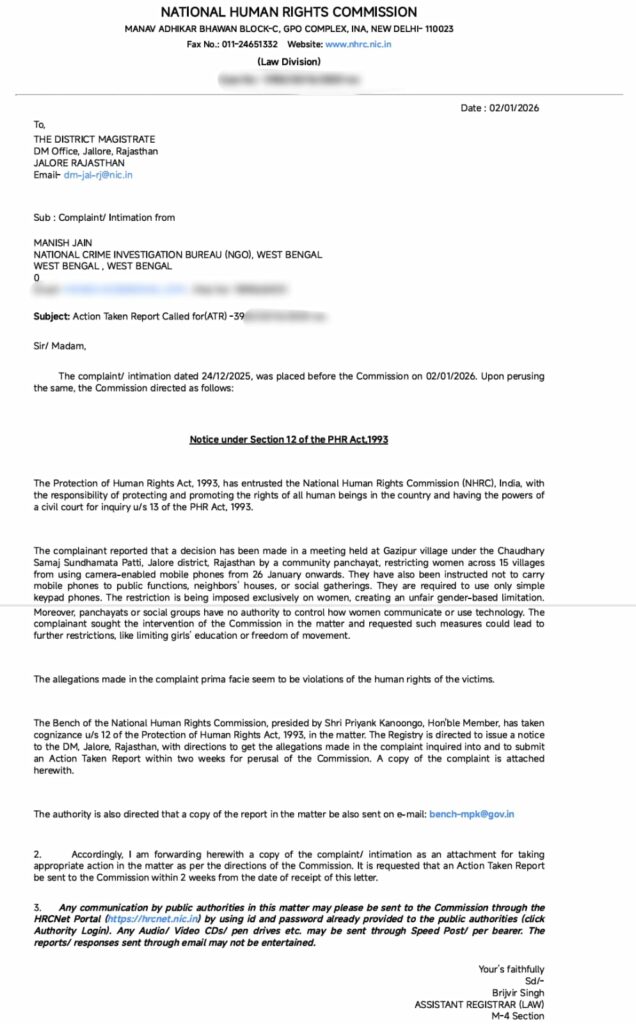
पंचायत के फैसले पर सवाल: राष्ट्रीय अपराध जांच ब्यूरो (NCIB) – NGO की शिकायत पर NHRC का नोटिस

राजस्थान में महिलाओं पर मोबाइल पाबंदी का मामला राजस्थान के जालौर जिले के 15 गांवों में महिलाओं द्वारा कैमरे वाले स्मार्टफोन के उपयोग पर लगाए गए प्रतिबंध के मामले में राष्ट्रीय मानवाधिकार आयोग (NHRC) ने कड़ा संज्ञान लिया है।

यह कार्रवाई राष्ट्रीय अपराध जांच ब्यूरो (NCIB-NGO) द्वारा आयोग को भेजी गई शिकायत के आधार पर की गई है।मामले के अनुसार, जालौर जिले के गाजीपुर गांव में चौधरी समाज की सुंधामाता पट्टी की पंचायत द्वारा यह निर्णय लिया गया कि संबंधित 15 गांवों की महिलाएं कैमरे वाले स्मार्टफोन का उपयोग नहीं करेंगी। पंचायत के आदेश में महिलाओं को केवल की-पैड मोबाइल फोन रखने की अनुमति दी गई है। इसके साथ ही शादी-विवाह, सामाजिक कार्यक्रमों में भाग लेने अथवा पड़ोस के घर जाते समय भी मोबाइल फोन साथ रखने पर रोक लगाने की बात कही गई है।

यह पाबंदी 26 जनवरी से लागू किए जाने की घोषणा की गई थी।इस निर्णय को महिला अधिकारों, समानता और व्यक्तिगत स्वतंत्रता के विरुद्ध मानते हुए राष्ट्रीय अपराध जांच ब्यूरो (NCIB) के एक अधिकारी ने पूरे प्रकरण को गंभीर बताते हुए राष्ट्रीय मानवाधिकार आयोग को औपचारिक शिकायत प्रेषित की। शिकायत में स्पष्ट रूप से उल्लेख किया गया कि यह प्रतिबंध केवल महिलाओं पर लागू किया गया है, जो लिंग आधारित भेदभाव की श्रेणी में आता है और संविधान तथा मानवाधिकार सिद्धांतों का उल्लंघन करता है।

श्री प्रियांक कानूनगो , मेंबर , राष्ट्रीय मानवाधिकार आयोग

शिकायत पर विचार करते हुए NHRC के सदस्य प्रियंक कानूनगो की अध्यक्षता वाली पीठ ने मानवाधिकार संरक्षण अधिनियम, 1993 की धारा 12 के अंतर्गत मामले का संज्ञान लिया। आयोग ने जालौर के जिलाधिकारी को नोटिस जारी कर निर्देश दिए हैं कि वे पूरे प्रकरण की निष्पक्ष जांच कर दो सप्ताह के भीतर विस्तृत कार्रवाई रिपोर्ट आयोग को प्रस्तुत करें।

NCIB के अधिकारी का बयान:

“किसी भी पंचायत या सामाजिक संस्था को महिलाओं की स्वतंत्रता, समानता और तकनीक तक पहुंच पर रोक लगाने का अधिकार नहीं है। यह आदेश न केवल संविधान के विरुद्ध है, बल्कि महिलाओं के मौलिक और मानवाधिकारों का सीधा उल्लंघन है। NCIB ऐसे हर मामले में पीड़ितों की आवाज बनकर खड़ा रहेगा।”

मानवाधिकार दृष्टिकोण से टिप्पणी:

“लिंग के आधार पर लगाया गया कोई भी सामाजिक प्रतिबंध मानव गरिमा और समानता के सिद्धांतों के खिलाफ है। ऐसे मामलों में त्वरित प्रशासनिक और कानूनी हस्तक्षेप आवश्यक है।”

आभार

राष्ट्रीय अपराध जांच ब्यूरो , महिलाओं के अधिकारों की रक्षा हेतु त्वरित संज्ञान लेने और निष्पक्ष जांच के निर्देश जारी करने के लिए NHRC के माननीय सदस्य श्री प्रियंक कानूनगो का आभार व्यक्त करता है। यह कार्रवाई ग्रामीण क्षेत्रों में महिलाओं के अधिकारों, स्वतंत्रता और लैंगिक समानता की दिशा में एक महत्वपूर्ण और सकारात्मक कदम मानी जा रही है।

NCIB ने स्पष्ट किया है कि वह भविष्य में भी महिलाओं और समाज के कमजोर वर्गों के मानवाधिकारों की रक्षा के लिए पूरी प्रतिबद्धता के साथ कार्य करता रहेगा।

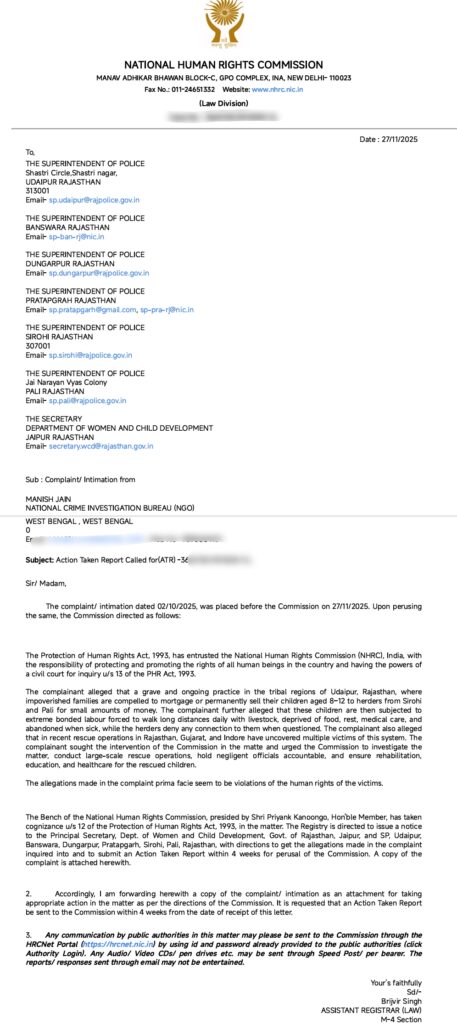
NHRC Takes Major Action on Child Trafficking and “Child Mortgage System” in Rajasthan — Notices Issued to Six District SPs and WCD Secretary, ATR Sought Within 4 Weeks

27 NOVEMBER 2025, NCIB WB

A shocking system of “mortgaging” or selling tribal children to shepherds in Rajasthan has now come under the scrutiny of the National Human Rights Commission (NHRC). Taking serious note of the allegations, the Commission has issued notices to the Superintendents of Police of Udaipur, Banswara, Dungarpur, Pratapgarh, Sirohi and Pali, along with the Principal Secretary of the Rajasthan Department of Women & Child Development (WCD).All officials have been directed to submit a detailed Action Taken Report (ATR) within four weeks.The action follows a detailed complaint submitted by Manish Jain, representing the National Crime Investigation Bureau (NGO), West Bengal Team.


What Is the Case?

The complaint reveals a cruel and inhuman practice prevalent in tribal regions, where children aged 8 to 12 are mortgaged or permanently sold for ₹20,000 to ₹45,000 to shepherds, mainly from Sirohi and Pali.

The Shocking Reality of the Children

According to the complaint, these children face extreme exploitation: Forced to walk 30–35 km daily with livestock Denied proper food, rest, and medical care Abandoned by employers when they fall sick Shepherds deny any relation to the children when NGOs or police question them It amounts to a modern form of slavery and bonded labour. Rescue Operations Reveal the Truth Rescue operations over the past year have confirmed the allegations: Indore Police, with NGOs, rescued eight children from Udaipur, Banswara, Dungarpur and Pratapgarh Additional rescues were made from Gujarat and other areas of Rajasthan All the children were victims of this same “child mortgage” system.


Rescue Operations Reveal the Truth

Rescue operations over the past year have confirmed the allegations:Indore Police, with NGOs, rescued eight children from Udaipur, Banswara, Dungarpur and Pratapgarh. Additional rescues were made from Gujarat and other areas of Rajasthan. All the children were victims of this same “child mortgage” system.


NHRC Observation: “Prima Facie Human Rights Violations”

Bench headed by Shri Priyank Kanoongo, Hon’ble Member, concluded that the allegations “prima facie appear to be violations of human rights.”The Commission ordered: A thorough investigation of all allegations. Field verification of facts Submission of a detailed ATR within four weeks.


Laws Violated?

This practice involves clear violations of:

Child Labour (Prohibition and Regulation) Act. Bonded Labour System (Abolition) Act Juvenile Justice (Care and Protection of Children) Act

Right to Education Act

Articles 21, 23 and 24 of the Constitution of India


What Did Manish Jain Demand?

In the complaint, Manish Jain urged the NHRC to:

Launch large-scale rescue operations in tribal belts.

Ensure rehabilitation, education, and medical care for rescued children.

Fix accountability of negligent officials.

Take tough action against human trafficking networks and exploiters


Why Is NHRC’s Action Significant?

This is the first time that a widespread network operating across multiple districts has faced:

✔ National-level cognizance

✔ Simultaneous notices to SPs of six districts

✔ Accountability fixed on the WCD Department

✔ A strict four-week deadline

Experts believe this action could lead to large-scale rescues and strict criminal proceedings against offenders.


“Children cannot be mortgaged for livelihood. NHRC’s intervention brings new hope for tribal children. Rajasthan’s administration must now act swiftly and sternly.”

Manish Jain

Why This Story Matters

This issue is not just about Rajasthan—it reflects a national crisis of child safety, poverty-driven exploitation, and human trafficking. NHRC’s action could trigger major rescue operations, systemic reforms, and criminal accountability.

RBI & TRAI Must Intervene: Surat Resident and NCIB Member Harassed for 5 Days by CreditQ’s Robocalls Despite No Fault; Company Denies Harassment, Offers No Apology

Surat, November 2025:

A disturbing incident involving continuous harassment by automated calls has raised serious concerns over the functioning and verification practices of CreditQ, a business reporting and debt data platform. Manish Jain, a Surat resident and active member of the National Crime Investigation Bureau (NGO), reportedly received 30 to 40 robocalls daily for five consecutive days, despite having no connection to the company’s listed defaulter. The issue arose after CreditQ mistakenly linked Jain to a Muskan Trading Company based in Ulhasnagar, Maharashtra. Jain, however, runs Muskan Trading Co. in Surat, a completely unrelated brokerage firm with a different GST number, business type, and location.

Wrong Identity, Yet Repeated Harassment

According to Jain, the company did not attempt to verify its data before repeatedly contacting him. Instead, CreditQ allegedly asked him to submit firm documents and provide a letter on his company letterhead confirming that he was a “different person.”

“Why should I share my firm documents with an unknown, unauthorised platform, especially when the mistake is entirely theirs?” Jain asked, pointing out that he had never shared his number with any such Maharashtra-based entity.

Victim Solved the Case Himself

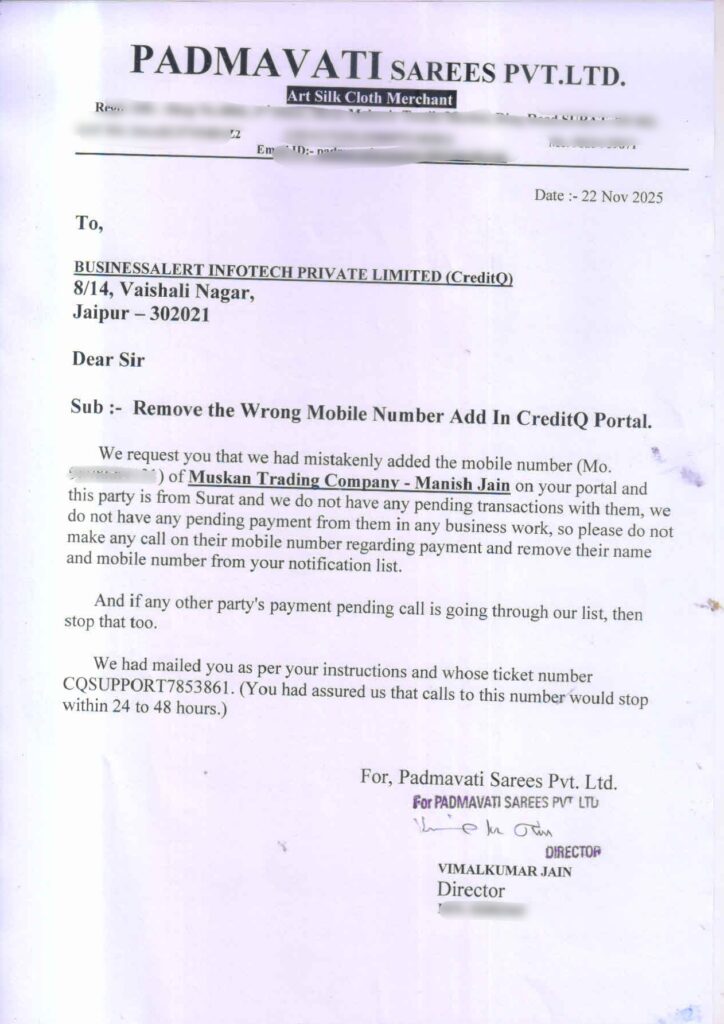
CreditQ did not guide Jain in identifying the issue.Taking the matter into his own hands, Jain contacted Padmavati Sarees Pvt. Ltd., one of the firms involved in the dispute. Padmavati confirmed that their outstanding matter was with a different Muskan Trading Company in Ulhasnagar. They immediately corrected their records.However, CreditQ’s robocalls continued even after the correction, raising concerns about delays or failures in its internal update and verification processes.

NCIB Provided Support and Intervention

As a member of the National Crime Investigation Bureau (NGO), Jain approached his organisation for support. The Director General of NCIB, Shri Suresh Sukhla, offered guidance and indicated readiness to escalate the matter through official channels.With NCIB’s assistance, Jain eventually succeeded in having his number removed from CreditQ’s system without sharing any firm documents, highlighting that the platform’s earlier demands were unnecessary and improper.

Transparency Concerns Over CreditQ Website

Jain also noted that the CreditQ website lacks a physical office address and grievance contact details, raising further questions about transparency, accountability, and compliance with standard business norms.

Cyber Complaint Redirected

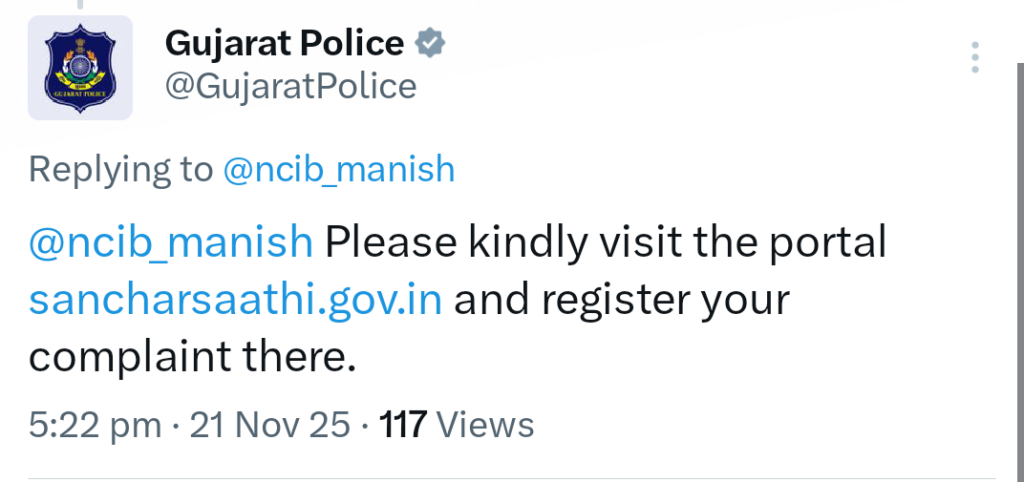
Although Jain filed a cyber complaint, Gujarat Police directed him to submit details on Sanchar Saathi, the central telecom abuse portal. Jain highlighted the impracticality of manually uploading 40 different call numbers daily, calling it unreasonable for any victim of such harassment.

Call for RBI and TRAI Intervention

The case raises serious regulatory concerns:

Should platforms be allowed to make robocalls to DND-registered numbers without verification?Why did CreditQ ask the victim for documents instead of reconfirming details with their paying client?Why did calls continue even after the client corrected the data?Why does the company’s website lack mandatory contact information?What verification protocols exist before uploading personal data to such platforms?

A Need for Stronger Oversight

Consumer safety experts believe that the incident underscores the need for stronger oversight from RBI and TRAI, as unchecked automated calling systems and inadequate verification processes pose a risk to citizens.“If authorities do not intervene, more individuals may face similar harassment due to data errors and automated call platforms operating without proper safeguards,” Jain said.