

Move under DPCO, 2013 aims to curb excessive trade mark-ups, improve affordability and ensure uninterrupted availability of essential cancer medicines
The National Pharmaceutical Pricing Authority (NPPA) has approved a trade margin rationalisation (TMR) mechanism for 137 non-scheduled anti-cancer drugs, capping trade margins at 30% of the maximum retail price (MRP), excluding GST. The revised prices will come into effect from November 9, 2026, and remain in force until further orders.
The revised prices of the identified non-scheduled anti-cancer drugs are expected to decrease by up to 70%, depending on their existing price structures. However, the actual reduction will vary from medicine to medicine.
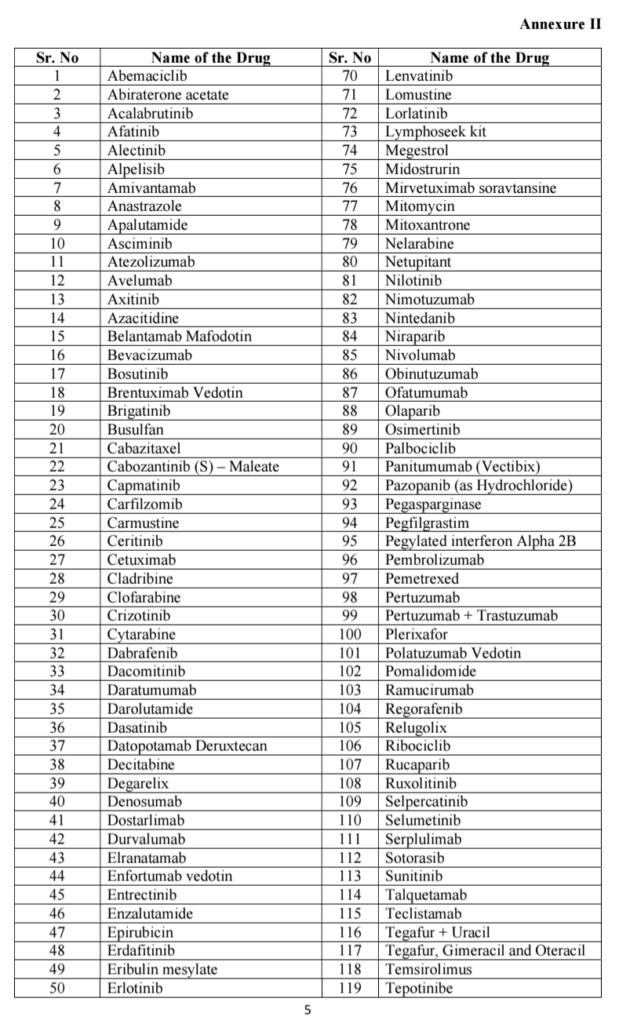
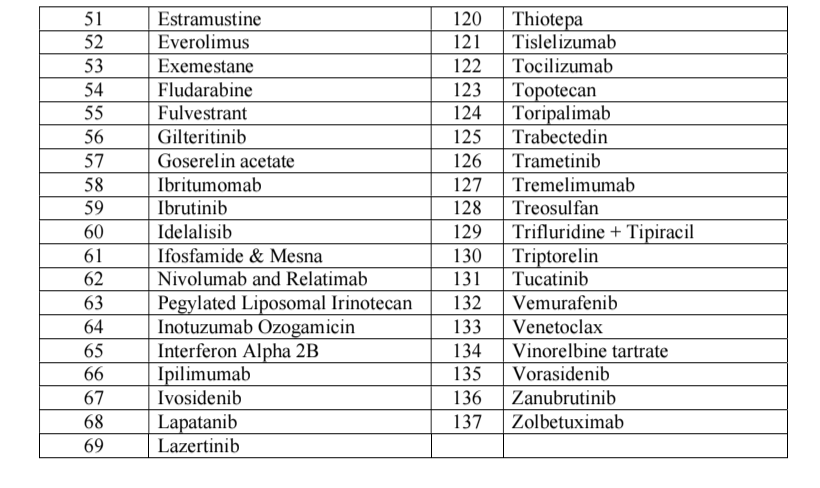
The decision was taken at the Authority’s 284th overall and 152nd meetings under the Drugs (Prices Control) Order (DPCO), 2013, held on October 16 and 17, 2026, under the chairmanship of Manoj Joshi, Secretary, Department of Pharmaceuticals and Chairman of NPPA.
The intervention will be implemented under Paragraph 19 of DPCO, 2013, which empowers the government to take action in extraordinary circumstances in the public interest.
Price cap to curb excessive trade mark-ups
According to the meeting minutes, the Authority considered the need to address excessive trade mark-ups on non-scheduled anti-cancer medicines, citing market evidence, public-health concerns and the precedent set by a similar intervention in 2019.
The Authority decided to limit the trade margin to 30% of the MRP, excluding GST. This corresponds to a mark-up of 42.86% on the price to stockist or price to distributor (PTS/PTD), allowing a reasonable margin for the trade while seeking to prevent excessive increases in retail prices.
The measure follows deliberations at the Authority’s previous meeting on October 8, 2026, and is based on recommendations from an expert committee of the Ministry of Health and Family Welfare, which identified 137 anti-cancer drugs for inclusion in the exercise.
The 137 identified medicines include immunotherapy drugs used to treat more than 20 types of cancer, as well as Denosumab, used by breast and prostate cancer patients; Pegfilgrastim, used to prevent neutropenia in cancer patients; and Bevacizumab, approved for the treatment of certain cancers, including colorectal, ovarian and cervical cancer. The PIB release also highlighted medicines such as Pembrolizumab, Durvalumab and Osimertinib, whose revised MRPs are expected to improve affordability for cancer patients.
March 2026 prices to serve as the reference
NPPA has approved a mechanism for calculating revised MRPs using PTS/PTD data for March 2026 as the reference.
The PTS/PTD will be calculated by dividing the manufacturer’s net sales realisation for the relevant product during the reference month by the total quantity sold. If a manufacturer recorded no sales during March 2026, the calculation will use sales data for the period from April 2025 to March 2026.
All categories of sales will be considered, except government sales.
For formulations launched after March 31, 2026, the revised MRP will be calculated using the current PTS/PTD. Where manufacturers supply medicines directly to hospitals or medical institutions, the institutions will be treated as stockists or distributors, and the manufacturer’s invoice data will be used for the calculation.
Higher-priced formulations must be reduced
Manufacturers selling branded or generic versions of the covered medicines at prices above the newly calculated MRP will be required to reduce their prices accordingly. Where an existing MRP is lower than the calculated price, the lower price must be maintained.
The order will also cover patented medicines, except where an exemption has been approved under Paragraph 32 of DPCO, 2013.
The price-control mechanism will apply to non-scheduled formulations containing any of the listed drugs, whether used individually or in combination. Its coverage will extend across strengths, dosage forms and routes of administration, including formulations used for therapeutic indications other than cancer.
Following publication of the notification in the Official Gazette, earlier price orders fixing ceiling prices or retail prices under the relevant provisions of DPCO, 2013, where applicable, will stand superseded as specified in the order.
Manufacturers given seven days to submit revised prices
Manufacturers will have seven days from publication of the order in the Official Gazette to submit revised MRP information to NPPA and the concerned State Drug Controller, whether or not the MRP changes.
Consumers can check the revised prices of medicines through the NPPA website and the Pharma Sahi Daam mobile application. Manufacturers must disseminate revised price lists to retailers and hospitals, while hospitals are required to ensure that the applicable reduced prices are implemented from November 9, 2026.
They must also issue and submit the revised price list in Form V through the Integrated Pharmaceutical Database Management System (IPDMS) and provide copies to State Drug Controllers, dealers and other relevant entities within the same period.
Failure to submit the required information will be treated as non-reduction of MRP and may lead to action to recover overcharged amounts under the applicable provisions of DPCO, 2013.Retailers, dealers, hospitals and medical institutions will be required to prominently display the applicable price lists and supplementary price lists.
Patient assistance programmes receive conditional exemption
The order provides for the exclusion of quantities supplied free of cost to patients under manufacturers’ Patient Assistance Programmes (PAP) from PTS/PTD and MRP calculations for trade-margin capping, subject to specified conditions.Manufacturers will have to furnish an undertaking to NPPA and maintain detailed patient records, including identity and residence documents, disease and prescription details, and records of medicines imported, received and consumed.
The medicines must be used exclusively for the specified purpose. NPPA will retain the authority to seek additional information, conduct audits and inspections, and verify programme implementation. Non-compliance may result in the relevant quantities losing the exemption.
Supply continuity and regulatory monitoringAlongside price regulation, NPPA has emphasised the need to maintain uninterrupted supplies of the covered medicines.
Manufacturers will be required to maintain current production levels. Any manufacturer proposing to reduce average monthly production must obtain prior permission from NPPA. Those intending to discontinue production or imports must submit the prescribed information in Form IV of Schedule II of DPCO, 2013, at least six months before the proposed discontinuation date.
Hospitals and medical institutions, which account for a substantial share of anti-cancer medicine purchases, have also been asked to monitor MRPs and report violations to NPPA.
State Drug Controllers will oversee compliance by manufacturers, dealers, hospitals and medical institutions. NPPA may initiate recovery proceedings in cases of overcharging.
Annual price increases remain subject to the cap
Manufacturers may continue to avail themselves of annual price increases under Paragraph 20(1) of DPCO, 2013, provided they remain compliant with the maximum permissible trade margin specified in the order.
The measure represents a significant regulatory intervention in the non-scheduled anti-cancer medicines segment, seeking to balance reasonable trade margins with patient affordability and reliable medicine supplies.
The revised prices are scheduled to take effect on November 9, 2026, subject to publication of the order in the Official Gazette and the requirements specified therein.
A Step Towards Affordable Cancer Care and Better Patient Outcomes
Beyond price regulation, this decision could bring meaningful relief to cancer patients and their families, who often face substantial financial hardship during prolonged treatment. More affordable medicines may help patients adhere to prescribed treatment, reduce the likelihood of interruptions due to financial constraints, and ease the emotional and economic stress experienced by caregivers. The initiative could also promote greater transparency in medicine pricing and strengthen public confidence in the healthcare system. However, its real impact will depend on effective implementation, actual reductions in the prices of individual medicines, and consistent availability across hospitals, pharmacies and rural healthcare facilities. Ultimately, the move reinforces the principle that access to essential cancer treatment should not be determined solely by a patient’s financial circumstances, but should remain a priority in the pursuit of equitable, compassionate and patient-centred healthcare.