NHRC Takes Cognizance of Unsafe Drinking Water Across States, Calls It Human Rights Violation

Updated : January 23, 2026

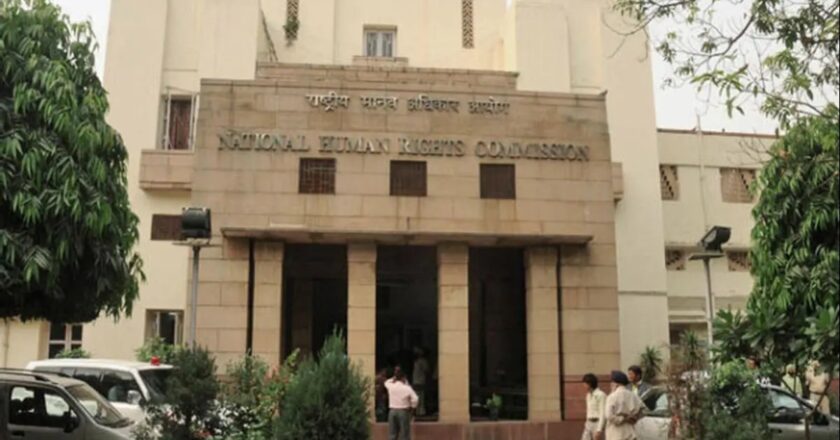
The National Human Rights Commission (NHRC) has taken cognizance of serious concern related to the supply of contaminated and unsafe drinking water in multiple Indian states, observing that the issue amounts to a prima facie violation of human rights and the constitutional Right to Life.

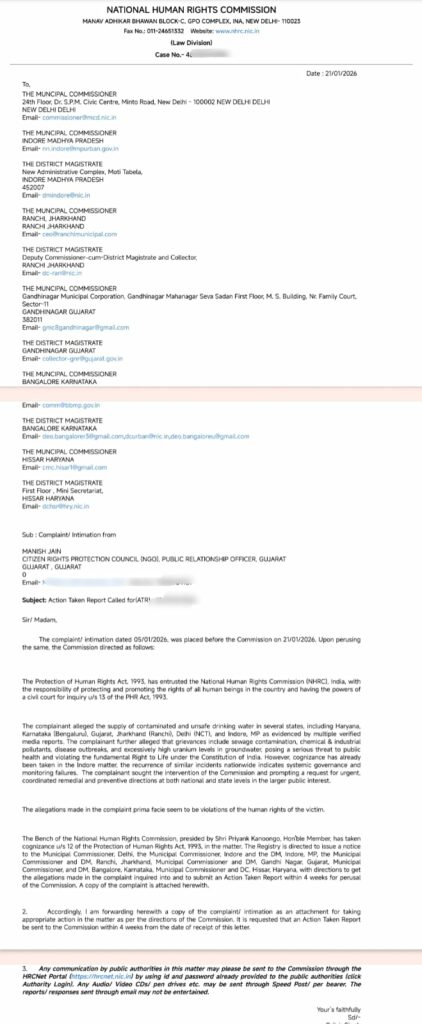
The Commission has issued notices to senior municipal and district authorities in Delhi (NCT), Indore (Madhya Pradesh), Ranchi (Jharkhand), Gandhinagar (Gujarat), Bengaluru (Karnataka), and Hisar (Haryana), directing them to conduct inquiries and submit Action Taken Reports (ATRs) within four weeks.


Clean Drinking Water Integral to Right to Life: NHRC

In its order dated 21 January 2026, the NHRC noted that access to safe and potable drinking water is inseparable from human dignity, public health, and survival.

The complaint placed before the Commission referred to multiple verified media reports highlighting:

  • Sewage contamination in drinking water supply
  • Chemical and industrial pollutants
  • Outbreaks of waterborne diseases
  • Excessively high uranium levels in groundwater

The Commission observed that such conditions pose a grave threat to public health, particularly affecting children, elderly persons, and economically vulnerable communities.


Pattern of Failures, Not Isolated Incidents

While acknowledging that cognizance had already been taken earlier in an Indore-related matter, the NHRC stated that the recurrence of similar incidents across different states indicates systemic governance and monitoring failures.

The Commission emphasized that repeated lapses by civic bodies and district administrations reflect deeper issues in regulation, infrastructure maintenance, and accountability mechanisms.


Cognizance Taken Under Protection of Human Rights Act

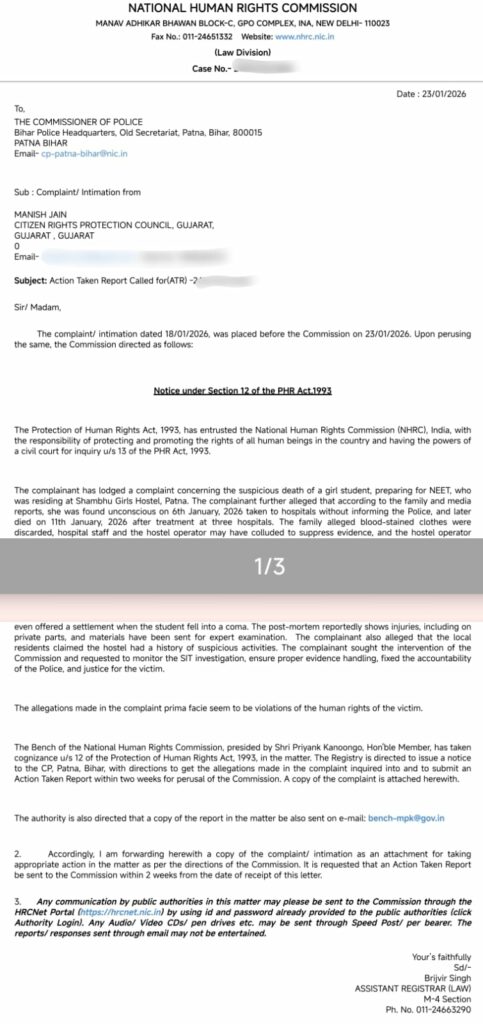
The matter was considered by the NHRC Bench presided over by Hon’ble Member Shri Priyank Kanoongo. The Commission took cognizance under Section 12 of the Protection of Human Rights Act, 1993, and reiterated that it has the powers of a civil court under Section 13 to inquire into such violations.

Notices have been issued to Municipal Commissioners and District Magistrates of all concerned regions, directing them to personally ensure inquiry, corrective steps, and preventive measures.


Citizen Rights Protection Council (NGO) Brings Issue to NHRC

The issue was raised by Manish, public relationship officer Gujarat, highlighting the nationwide scale of the drinking water crisis.

CRPC presented media reports suggesting that unsafe water supply is no longer an isolated civic failure but a widespread public health and human rights concern, requiring urgent intervention at both state and national levels.

The involvement of the Citizen Rights Protection Council underscores the role of civil society in flagging systemic issues and ensuring that citizens’ grievances reach constitutional oversight bodies.

“Recurring incidents of polluted water supply across multiple states point to institutional neglect, not isolated errors, and demand urgent corrective and preventive action.”

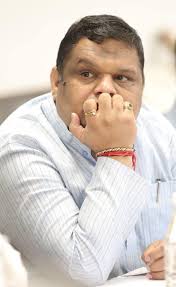
Manish Jain PRO State

Strict Reporting Mechanism Ordered

The NHRC has directed that:

  • All inquiries must be conducted promptly
  • Concrete remedial and preventive steps must be initiated
  • Action Taken Reports must be submitted only through the HRCNet Portal / Speed post.

A Strong Signal on Public Health Accountability

Human rights experts say the NHRC’s intervention reinforces the principle that failure to provide safe drinking water is not merely administrative negligence but a violation of human rights.

As authorities across multiple states prepare their responses, the case is being closely watched as a potential benchmark for treating environmental and public health failures through a human rights accountability framework.

पंचायत के फैसले पर सवाल: राष्ट्रीय अपराध जांच ब्यूरो (NCIB) – NGO की शिकायत पर NHRC का नोटिस

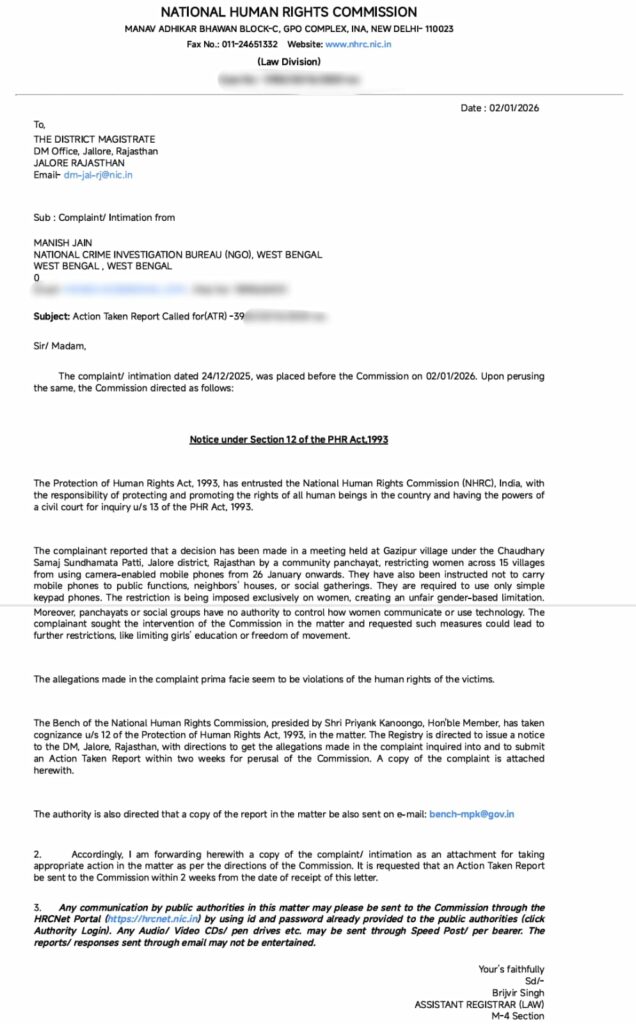
राजस्थान में महिलाओं पर मोबाइल पाबंदी का मामला राजस्थान के जालौर जिले के 15 गांवों में महिलाओं द्वारा कैमरे वाले स्मार्टफोन के उपयोग पर लगाए गए प्रतिबंध के मामले में राष्ट्रीय मानवाधिकार आयोग (NHRC) ने कड़ा संज्ञान लिया है।

यह कार्रवाई राष्ट्रीय अपराध जांच ब्यूरो (NCIB-NGO) द्वारा आयोग को भेजी गई शिकायत के आधार पर की गई है।मामले के अनुसार, जालौर जिले के गाजीपुर गांव में चौधरी समाज की सुंधामाता पट्टी की पंचायत द्वारा यह निर्णय लिया गया कि संबंधित 15 गांवों की महिलाएं कैमरे वाले स्मार्टफोन का उपयोग नहीं करेंगी। पंचायत के आदेश में महिलाओं को केवल की-पैड मोबाइल फोन रखने की अनुमति दी गई है। इसके साथ ही शादी-विवाह, सामाजिक कार्यक्रमों में भाग लेने अथवा पड़ोस के घर जाते समय भी मोबाइल फोन साथ रखने पर रोक लगाने की बात कही गई है।

यह पाबंदी 26 जनवरी से लागू किए जाने की घोषणा की गई थी।इस निर्णय को महिला अधिकारों, समानता और व्यक्तिगत स्वतंत्रता के विरुद्ध मानते हुए राष्ट्रीय अपराध जांच ब्यूरो (NCIB) के एक अधिकारी ने पूरे प्रकरण को गंभीर बताते हुए राष्ट्रीय मानवाधिकार आयोग को औपचारिक शिकायत प्रेषित की। शिकायत में स्पष्ट रूप से उल्लेख किया गया कि यह प्रतिबंध केवल महिलाओं पर लागू किया गया है, जो लिंग आधारित भेदभाव की श्रेणी में आता है और संविधान तथा मानवाधिकार सिद्धांतों का उल्लंघन करता है।

श्री प्रियांक कानूनगो , मेंबर , राष्ट्रीय मानवाधिकार आयोग

शिकायत पर विचार करते हुए NHRC के सदस्य प्रियंक कानूनगो की अध्यक्षता वाली पीठ ने मानवाधिकार संरक्षण अधिनियम, 1993 की धारा 12 के अंतर्गत मामले का संज्ञान लिया। आयोग ने जालौर के जिलाधिकारी को नोटिस जारी कर निर्देश दिए हैं कि वे पूरे प्रकरण की निष्पक्ष जांच कर दो सप्ताह के भीतर विस्तृत कार्रवाई रिपोर्ट आयोग को प्रस्तुत करें।

NCIB के अधिकारी का बयान:

“किसी भी पंचायत या सामाजिक संस्था को महिलाओं की स्वतंत्रता, समानता और तकनीक तक पहुंच पर रोक लगाने का अधिकार नहीं है। यह आदेश न केवल संविधान के विरुद्ध है, बल्कि महिलाओं के मौलिक और मानवाधिकारों का सीधा उल्लंघन है। NCIB ऐसे हर मामले में पीड़ितों की आवाज बनकर खड़ा रहेगा।”

मानवाधिकार दृष्टिकोण से टिप्पणी:

“लिंग के आधार पर लगाया गया कोई भी सामाजिक प्रतिबंध मानव गरिमा और समानता के सिद्धांतों के खिलाफ है। ऐसे मामलों में त्वरित प्रशासनिक और कानूनी हस्तक्षेप आवश्यक है।”

आभार

राष्ट्रीय अपराध जांच ब्यूरो , महिलाओं के अधिकारों की रक्षा हेतु त्वरित संज्ञान लेने और निष्पक्ष जांच के निर्देश जारी करने के लिए NHRC के माननीय सदस्य श्री प्रियंक कानूनगो का आभार व्यक्त करता है। यह कार्रवाई ग्रामीण क्षेत्रों में महिलाओं के अधिकारों, स्वतंत्रता और लैंगिक समानता की दिशा में एक महत्वपूर्ण और सकारात्मक कदम मानी जा रही है।

NCIB ने स्पष्ट किया है कि वह भविष्य में भी महिलाओं और समाज के कमजोर वर्गों के मानवाधिकारों की रक्षा के लिए पूरी प्रतिबद्धता के साथ कार्य करता रहेगा।

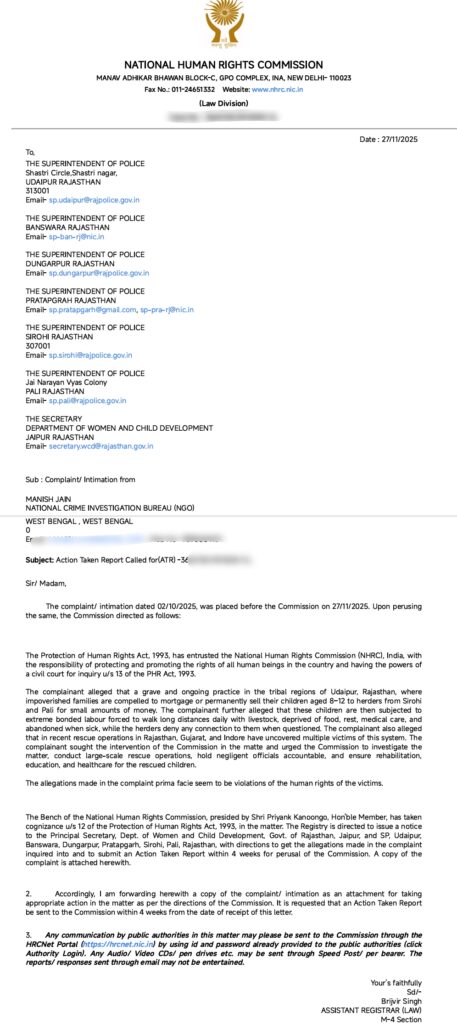
NHRC Takes Major Action on Child Trafficking and “Child Mortgage System” in Rajasthan — Notices Issued to Six District SPs and WCD Secretary, ATR Sought Within 4 Weeks

27 NOVEMBER 2025, NCIB WB

A shocking system of “mortgaging” or selling tribal children to shepherds in Rajasthan has now come under the scrutiny of the National Human Rights Commission (NHRC). Taking serious note of the allegations, the Commission has issued notices to the Superintendents of Police of Udaipur, Banswara, Dungarpur, Pratapgarh, Sirohi and Pali, along with the Principal Secretary of the Rajasthan Department of Women & Child Development (WCD).All officials have been directed to submit a detailed Action Taken Report (ATR) within four weeks.The action follows a detailed complaint submitted by Manish Jain, representing the National Crime Investigation Bureau (NGO), West Bengal Team.


What Is the Case?

The complaint reveals a cruel and inhuman practice prevalent in tribal regions, where children aged 8 to 12 are mortgaged or permanently sold for ₹20,000 to ₹45,000 to shepherds, mainly from Sirohi and Pali.

The Shocking Reality of the Children

According to the complaint, these children face extreme exploitation: Forced to walk 30–35 km daily with livestock Denied proper food, rest, and medical care Abandoned by employers when they fall sick Shepherds deny any relation to the children when NGOs or police question them It amounts to a modern form of slavery and bonded labour. Rescue Operations Reveal the Truth Rescue operations over the past year have confirmed the allegations: Indore Police, with NGOs, rescued eight children from Udaipur, Banswara, Dungarpur and Pratapgarh Additional rescues were made from Gujarat and other areas of Rajasthan All the children were victims of this same “child mortgage” system.


Rescue Operations Reveal the Truth

Rescue operations over the past year have confirmed the allegations:Indore Police, with NGOs, rescued eight children from Udaipur, Banswara, Dungarpur and Pratapgarh. Additional rescues were made from Gujarat and other areas of Rajasthan. All the children were victims of this same “child mortgage” system.


NHRC Observation: “Prima Facie Human Rights Violations”

Bench headed by Shri Priyank Kanoongo, Hon’ble Member, concluded that the allegations “prima facie appear to be violations of human rights.”The Commission ordered: A thorough investigation of all allegations. Field verification of facts Submission of a detailed ATR within four weeks.


Laws Violated?

This practice involves clear violations of:

Child Labour (Prohibition and Regulation) Act. Bonded Labour System (Abolition) Act Juvenile Justice (Care and Protection of Children) Act

Right to Education Act

Articles 21, 23 and 24 of the Constitution of India


What Did Manish Jain Demand?

In the complaint, Manish Jain urged the NHRC to:

Launch large-scale rescue operations in tribal belts.

Ensure rehabilitation, education, and medical care for rescued children.

Fix accountability of negligent officials.

Take tough action against human trafficking networks and exploiters


Why Is NHRC’s Action Significant?

This is the first time that a widespread network operating across multiple districts has faced:

✔ National-level cognizance

✔ Simultaneous notices to SPs of six districts

✔ Accountability fixed on the WCD Department

✔ A strict four-week deadline

Experts believe this action could lead to large-scale rescues and strict criminal proceedings against offenders.


“Children cannot be mortgaged for livelihood. NHRC’s intervention brings new hope for tribal children. Rajasthan’s administration must now act swiftly and sternly.”

Manish Jain

Why This Story Matters

This issue is not just about Rajasthan—it reflects a national crisis of child safety, poverty-driven exploitation, and human trafficking. NHRC’s action could trigger major rescue operations, systemic reforms, and criminal accountability.