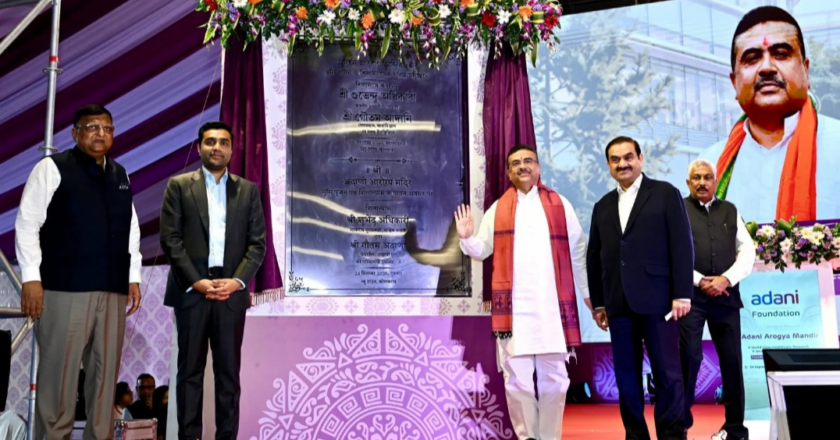
Kolkata, September 24, 2026: West Bengal Chief Minister Suvendu Adhikari laid the foundation stone for the proposed 2,000-bed Adani Arogya Mandir at the Bengal Silicon Valley Tech Hub in New Town, Kolkata, describing the project as a major step towards building an integrated healthcare ecosystem in Bengal.
The proposed medical institution, to be developed by the Adani Foundation, will involve an investment of more than ₹4,000 crore and will be spread across 51.75 acres. According to the Adani Group, the facility is expected to serve more than 2 lakh inpatients and over 20 lakh outpatients annually and create approximately 10,000 jobs across the healthcare ecosystem.
CM Adhikari: “Not just a hospital campus”
Speaking at the foundation-stone ceremony, Chief Minister Suvendu Adhikari said the project should be viewed as more than a hospital campus and expressed his expectation that it would contribute to rebuilding and developing Bengal.
“Mr Adani, we look forward to your presence to rebuild Bengal. The final vision is not just a hospital campus, it will be a fully integrated healthcare city. Nowhere in India is there a hospital of this high standard. The hospital will give a big boost to medical tourism. This is historic, meaningful and an auspicious day for us. Viksit Bharat 2047 can happen only if Bengal develops,”
Chief minister Suvendu Adhikari
The Chief Minister’s remarks placed healthcare infrastructure, medical tourism and Bengal’s broader economic development at the centre of the project.
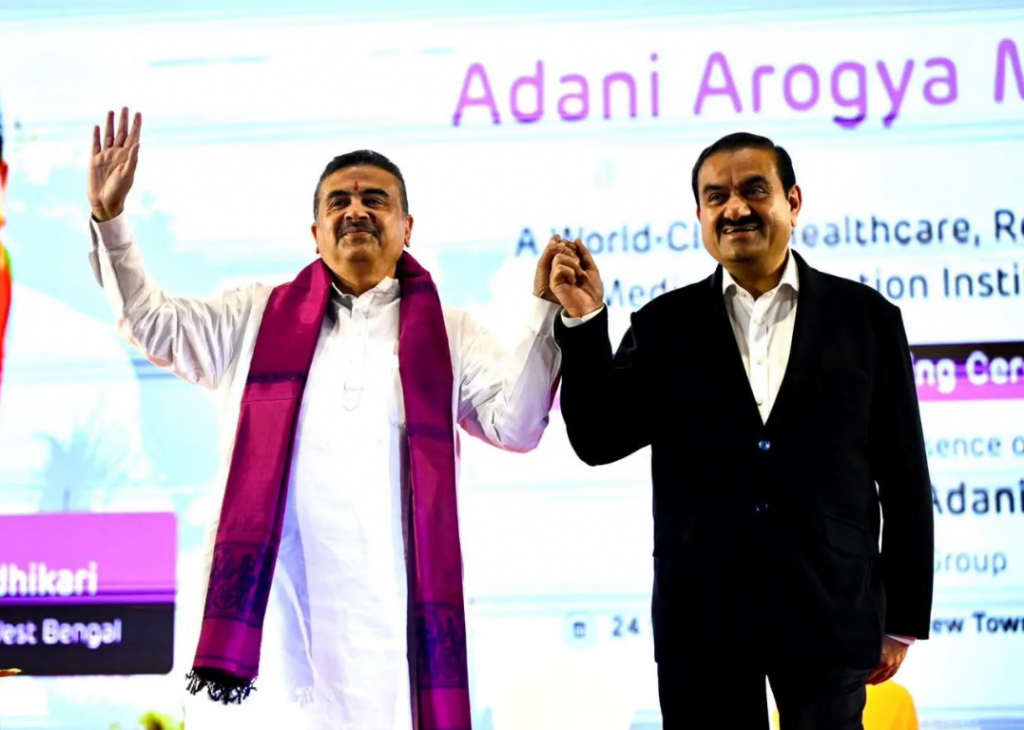
2,000-bed healthcare institution
The proposed Adani Arogya Mandir will be a multi-speciality hospital with step-down and transitional care facilities. The campus will also include a Meditel and Vishram Gruh to provide accommodation for relatives of patients receiving treatment.
Adani Group Chairman Gautam Adani said the institution would be a not-for-profit medical centre, with 1,000 of its 2,000 beds intended for economically weaker sections eligible under state and central health insurance schemes.
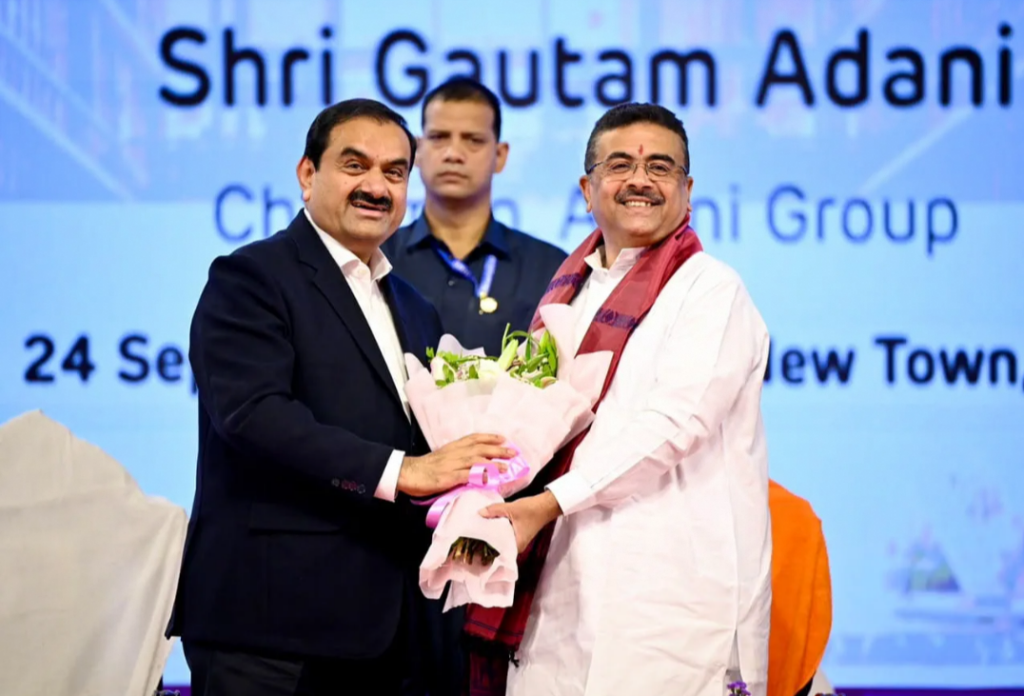
Focus on cancer care and medical education
The first phase of the hospital is planned to focus on cancer care, providing advanced tertiary and specialised healthcare services.The campus will also feature a medical college with an annual intake of 150 undergraduate students, more than 100 postgraduate students and over 40 super-specialists. A College of Nursing and an institution for allied healthcare and paramedical education are also planned.
The proposed research ecosystem will cover areas such as genomics, precision medicine, biomedical informatics, artificial intelligence, clinical trials and molecular and applied biomedical sciences.
The Adani Foundation has engaged Mayo Clinic Global Consulting and Singapore’s SingHealth to bring expertise in clinical care, academic medicine, digital health, quality, workforce development and innovation.
CM’s development vision and ₹1 lakh crore roadmap
The foundation-stone ceremony also saw the announcement of an investment roadmap of more than ₹1 lakh crore in West Bengal by 2035 by the Adani Group.
The proposed investments will cover ports, logistics, renewable energy, power generation, power transmission and distribution, roads and bridges, green cement and hyperscale data centres.
For the Chief Minister, the healthcare project comes as part of a wider development vision for Bengal, with the proposed medical city expected to combine healthcare delivery, medical education, research and specialised treatment.
Heritage and cultural initiatives
The Adani Group also signed two MoUs with the West Bengal government concerning the restoration of the historic Writers’ Building and support for Kolkata’s Durga Puja ecosystem through Adani Pujo Preview.
Support for the revitalisation of Kumartuli Ghat was also announced.
The proposed Adani Arogya Mandir is therefore positioned as one component of a wider set of healthcare, infrastructure, heritage and cultural initiatives announced during the Chief Minister’s foundation-stone ceremony.