

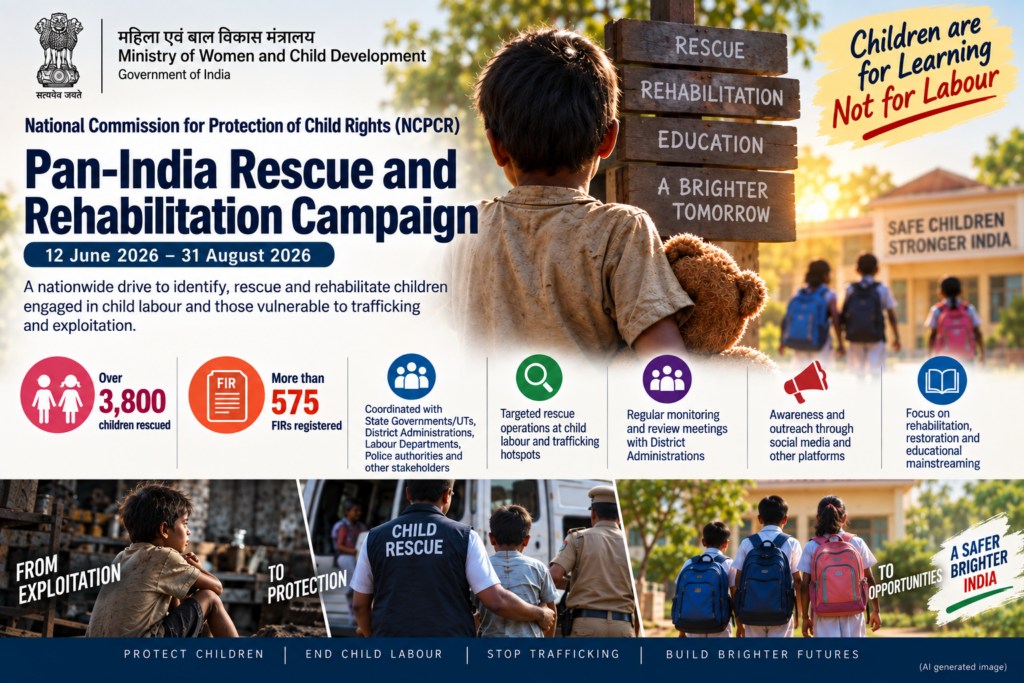
New Delhi, September 5, 2026: The National Commission for Protection of Child Rights (NCPCR), a statutory body under the Ministry of Women and Child Development, has successfully rescued over 3,800 children and facilitated the registration of more than 575 FIRs during its special “Pan-India Rescue and Rehabilitation” Campaign aimed at combating child labour, trafficking and exploitation.
The campaign was launched on June 12, 2026, observed as the World Day Against Child Labour, and continued until August 31, 2026.As part of the nationwide drive, the NCPCR worked in coordination with State Governments and Union Territory Administrations, District Magistrates, Labour Departments, police authorities and other stakeholders to intensify the identification, rescue and rehabilitation of children engaged in child labour and those vulnerable to trafficking and exploitation.
The Commission issued communications to concerned authorities across the country, calling for intensified and targeted rescue operations at identified child labour and trafficking hotspots. States and UTs were also asked to regularly furnish detailed information on rescue operations, including the number of children rescued, FIRs registered, rehabilitation measures, restoration to families, educational mainstreaming, compensation and other follow-up actions.
Focus on rehabilitation and educational mainstreaming
The campaign went beyond rescue operations, with the NCPCR emphasising the need for sustained rehabilitation and protection of rescued children.
The Commission monitored the implementation of the campaign and held meetings with District Administrations to assess progress and address field-level challenges. These meetings focused on reviewing rescue operations, resolving operational bottlenecks, ensuring timely submission of Action Taken Reports (ATRs), and strengthening coordination among departments and agencies involved in child protection.
The coordinated approach was aimed at ensuring that rescued children were not only removed from exploitative situations but also provided appropriate rehabilitation, restoration and opportunities to return to education.
Awareness and public participation
The NCPCR also undertook awareness and outreach activities through social media and other communication platforms during the campaign. The initiatives sought to spread awareness about child labour, encourage reporting of cases and highlight the importance of rehabilitation and educational mainstreaming after rescue.
The Commission’s efforts also sought to reinforce the role of government agencies and other stakeholders in identifying children at risk and responding promptly to cases involving child labour, trafficking and exploitation.
Over 3,800 children rescued
With sustained monitoring and proactive coordination with State and district authorities, the NCPCR said that more than 3,800 children were rescued during the campaign. Over 575 FIRs were also registered in connection with cases identified during the drive.
The figures underline the scale of the coordinated enforcement effort undertaken across the country and the continuing focus on protecting children from labour, trafficking and exploitation.
The NCPCR’s campaign has also placed emphasis on ensuring that rescue is followed by effective rehabilitation, family restoration where appropriate, compensation and educational mainstreaming, so that children rescued from exploitative circumstances can return to a safe and secure environment.
